
Do We Have A Tuttle Problem?
How to do better in 'ninja' publishing

Over the last three posts I’ve documented a range of serious problems with one of the most recent ‘ninja’ histories, Dr. Kacem Zoughari’s The Ninja: Ancient Shadow Warriors of Japan: The Secret History of Ninjutsu. In today’s post, I’ll wrap up a couple of the loose ends from that discussion, and then consider what we might learn from this whole debacle.
The first loose end is to provide the receipts, so to speak. In my first post on l’affaire Zoughari I provided only a small sample of the apparently plagiarized passages, and in the interests of being seen to fully support my claims the proper thing to do is to provide complete documentation thereof. So, as a public service, those masochistic enough to want to see the full range of problematic passages in Ancient Shadow Warriors are invited to consult the below 30-page PDF.

The second loose end is to consider an alternative explanation to plagiarism for the presence of the duplicated passages. As can be seen from comparing the bibliographies to Turnbull and Zoughari’s books, both authors claim to be using some of the same source materials, such as Yamaguchi Masayuki’s book The Lives of the Ninja (Ninja no seikatsu, 1980). It’s theoretically possible, then, that the similarities are because both authors are using the same source material.
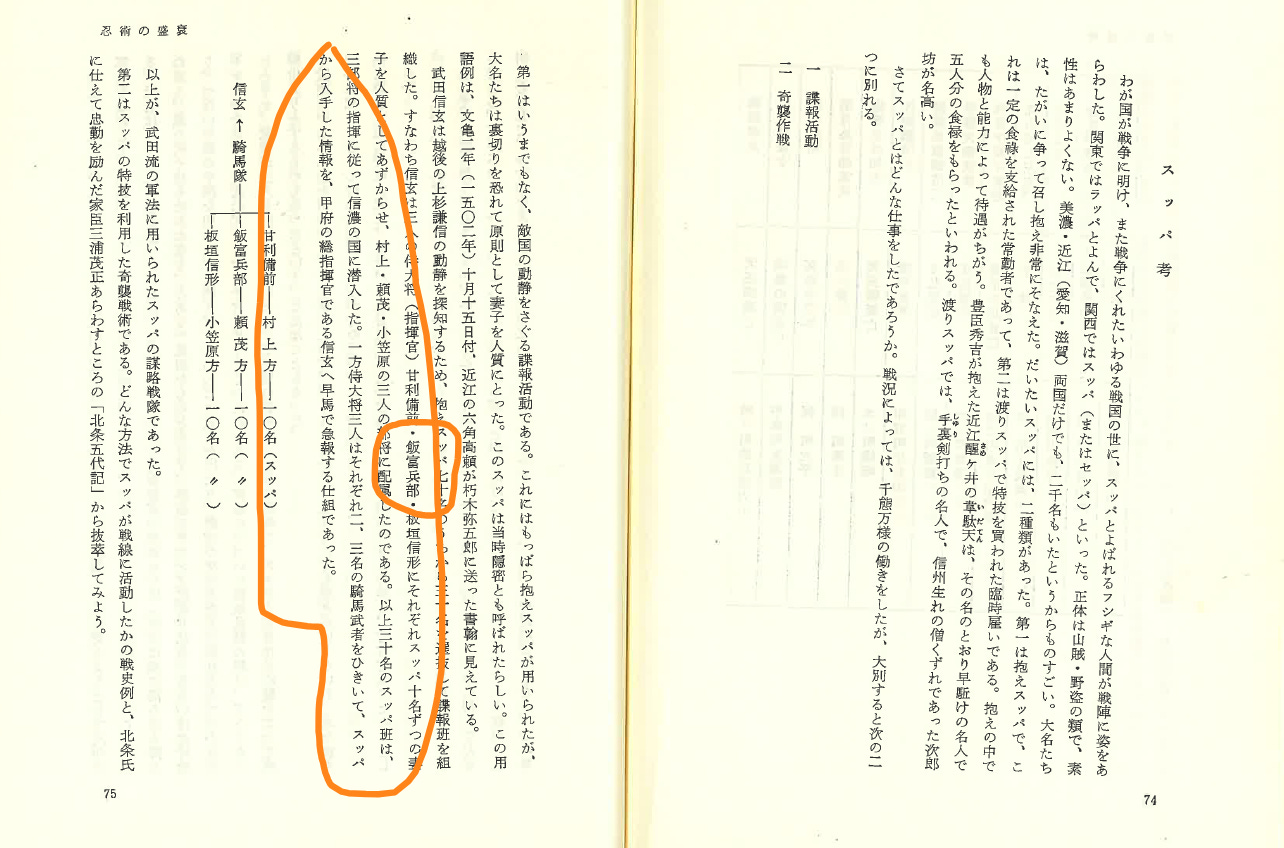
I did my due diligence here, checking Yamaguchi’s Lives of the Ninja, and it seems pretty clear that Zoughari is copying Turnbull rather than Yamaguchi. This can be seen by comparing two sections in the two English-language books:
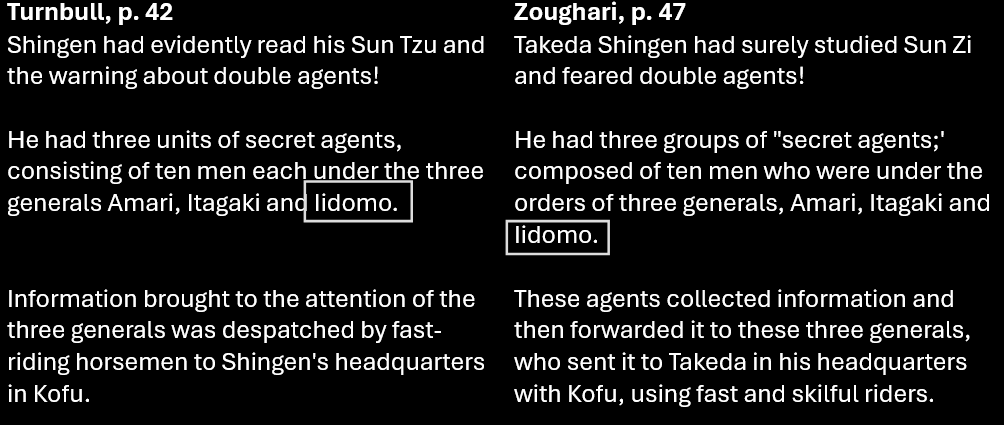
The first passage, the aside about Sun Zi, isn’t in Yamaguchi, so that strongly suggests that Zoughari is copying Turnbull, not Yamaguchi. The second passage confirms this, since Zoughari appears to have reproduced one of Turnbull’s errors. The error is that Turnbull has misread the pronunciation of the warrior surname 飯富 as ‘Iidomo’ when it should properly be ‘Obu.’ If Zoughari were reading Yamaguchi independently rather than simply copying Turnbull’s English material, he would presumably have checked the reading of the graphs himself (you can do it in about five seconds on Google) and would have no reason to make this error.
Finally, the section about “fast-riding horsemen” is more or less verbatim in Yamaguchi. Turnbull cites it properly and is thus is in the clear.1 Zoughari, though, has kept the same phrasing but removed Turnbull’s citation. (Those who have the language skills may want to check the footnote here to confirm this for themselves:2) So Zoughari is arguably guilty of double plagiarism here, since he’s using the work of both Turnbull and Yamaguchi without proper credit.
But after a certain point, we’re just beating a dead horse here.
Moving Forward, One Ninja Step At a Time
For the rest of this post I’d like to offer some thoughts on what this whole mess reveals about ‘ninja’ publishing, and where it can possibly go from here. Obviously, most of the responsibility for the dumpster fire that is Ancient Shadow Warriors falls on the book’s author. But it takes two to tango, as they say, and I think we also have to ask some pointed questions of the publisher, which would be Tuttle.
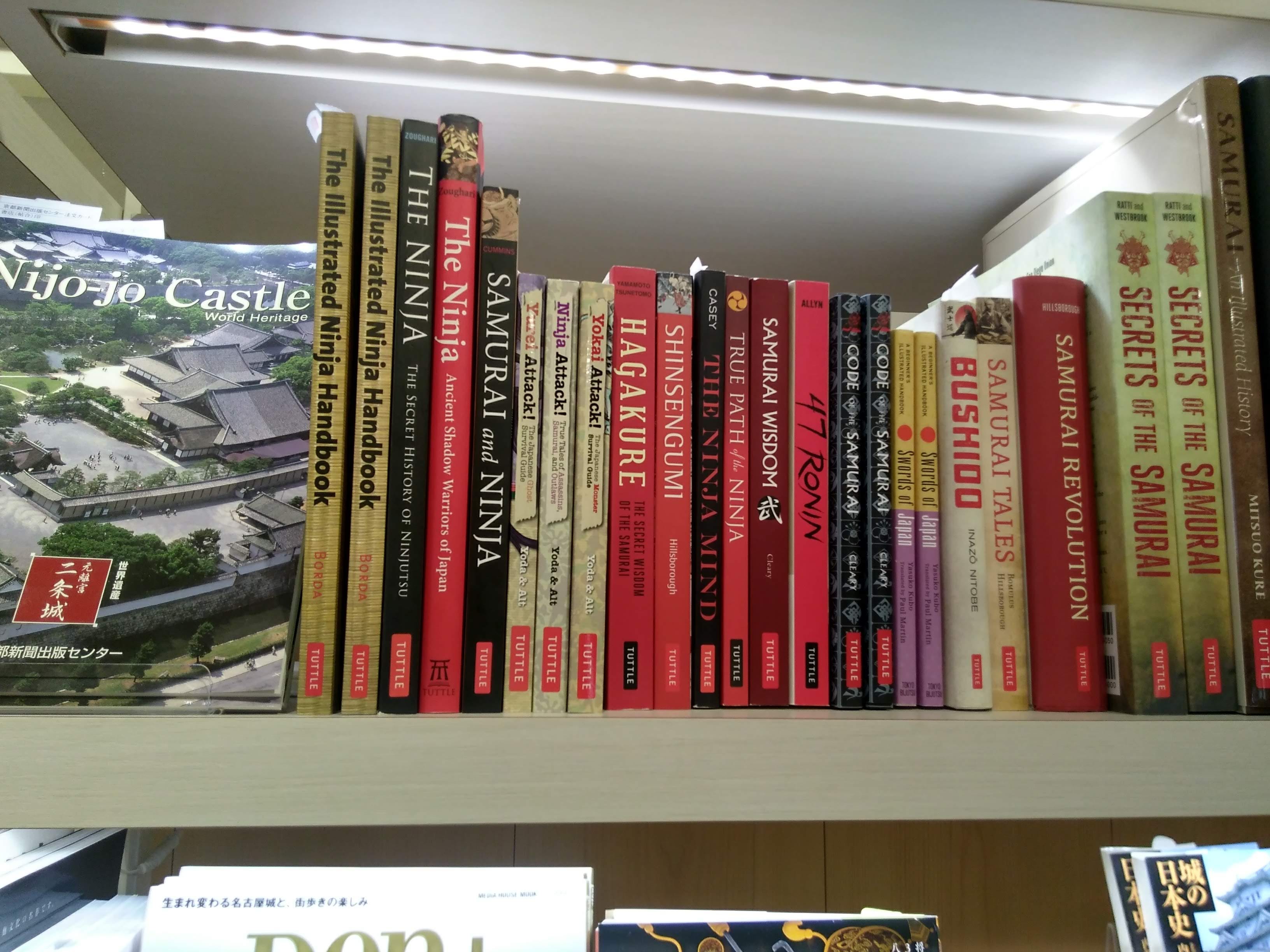
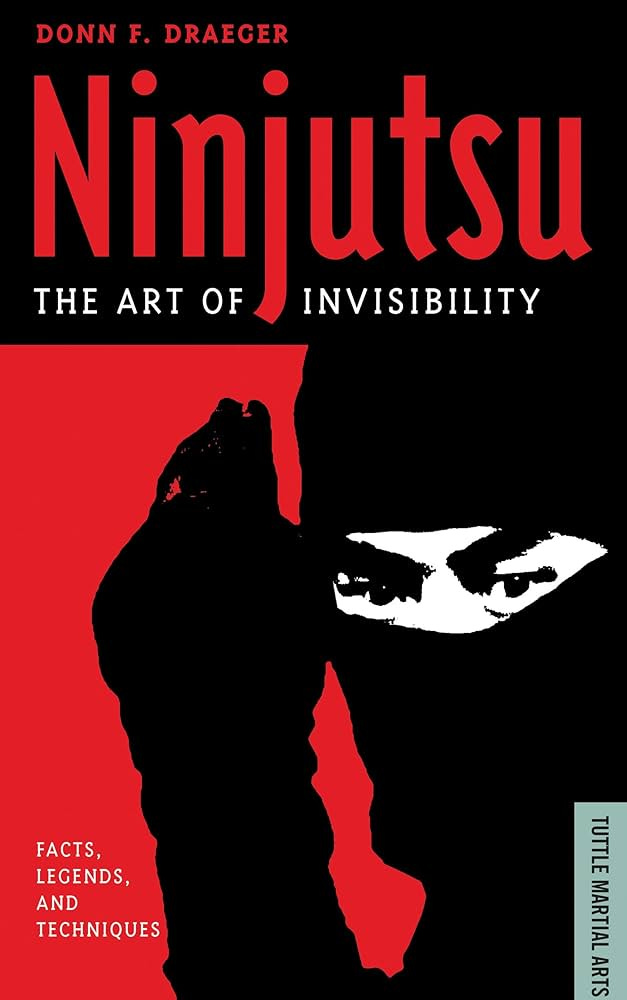
As you can see from the splash image for today’s post, Tuttle has something of a lock on pop-facing publications about East Asia, and more specifically about topics relating to historical warrior culture such as samurai and ‘ninja.’ If you’ve been with me for a while, you might have noticed that Tuttle’s name seems to pop up over and over again in the ‘ninja’ space; they are, for instance, the most recent publishers of Donn F. Draeger’s comically bad Ninjutsu (1971 onward):
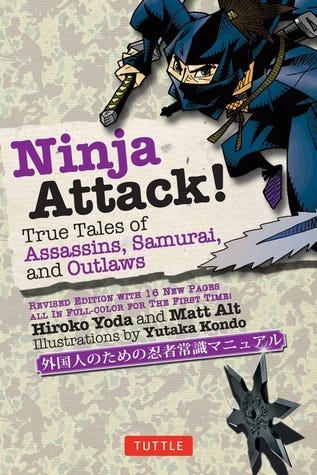
And also of Yoda and Alt’s 2012 Ninja Attack, which as we saw a couple of weeks back presents Mochizuki Chiyome as an historical ‘ninja:’
If you look closely at the spines of the books on the shelf at Nagoya Castle (up top), you’ll probably also notice the names of a few other prolific authors in the samurai-ninja space, notably Anthony Cummins and Romulus Hillsborough. Unquestionably, then, if you want to write a book about ‘ninja’ and have it be taken seriously, Tuttle is the company you should approach.
With Great Market Share Comes Great Responsibility
So it follows that Tuttle, more than any other single publisher, is responsible for loosing a fair bit of inaccurate information about Japanese history on the English-reading public.
Now, I acknowledge that Tuttle is first and foremost a commercial publisher, and answerable mostly to its bottom line. Unlike a university press, it cannot afford to put out intellectually significant works that won’t sell very many copies. All indications are that Tuttle’s ‘ninja’ books have sold pretty well and thereby played a decent role in keeping the company in the black. But a publisher - at least, a reputable publisher, which is what Tuttle generally is - also has a broader responsibility to its readers, the ones who fork out to buy their books. There are presses out there that specialize in fringe topics and probably do quite well out of working with niches that other publishers don’t necessarily want to touch. I don’t get the sense that that’s how Tuttle sees itself, though; the presence of books by established scholars in their catalogue suggests that they aren’t necessarily trying to be the ‘rebel’ publisher, but rather are keen to cultivate a sense of intellectual respectability in their offerings.
This is why Ancient Shadow Warriors is so dismaying. I would assume that Tuttle does at least try to make sure that the books they put out are reasonably decent quality, but whatever processes Tuttle has for review and quality control failed dismally here. That nobody with any expertise in Japanese studies reviewed the book before publication seems inarguable, but you also get the strong impression that the book wasn’t reviewed by even a general editor. You don’t have to be a specialist in Japanese studies to recognize that citations and end-notes don’t line up, that the book is littered with typos, that the writing is clunky, or that Zoughari has a weird habit of appearing to conceal his sources. Consider the color plates, for instance, which appear between p. 128 and 129:
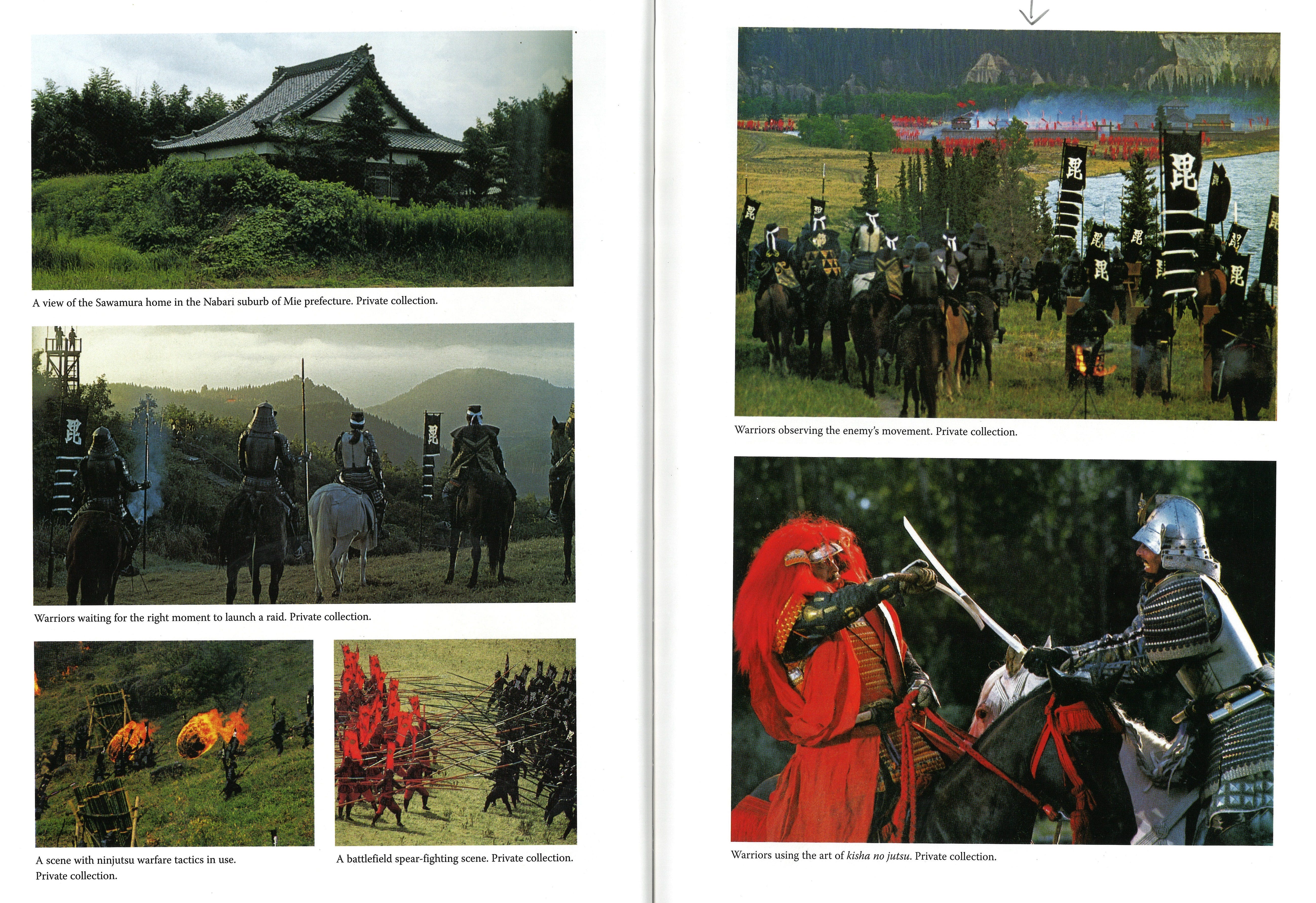
First impression on glancing at these illustrations is that they’re film stills rather than Zoughari’s personal photos or historical prints. That impression would be correct - they’re from the 1990 samurai movie Heaven and Earth (‘Ten to chi to,’ directed by Kadokawa Haruki; you can watch it on YouTube to confirm for yourself). Normal practice when using film stills in a book is, at the very least, to acknowledge where the images come from (something like: “Still image from Ten to chi to (1990) (C) Daiei Studios, used with permission.”), but the provenance of the images isn’t acknowledged at all.3 Or, as I pointed out a while back, when discussing the Uesugi Kenshin ‘toilet ninja’ myth, Zoughari straight-up refuses to tell the reader what his source is:
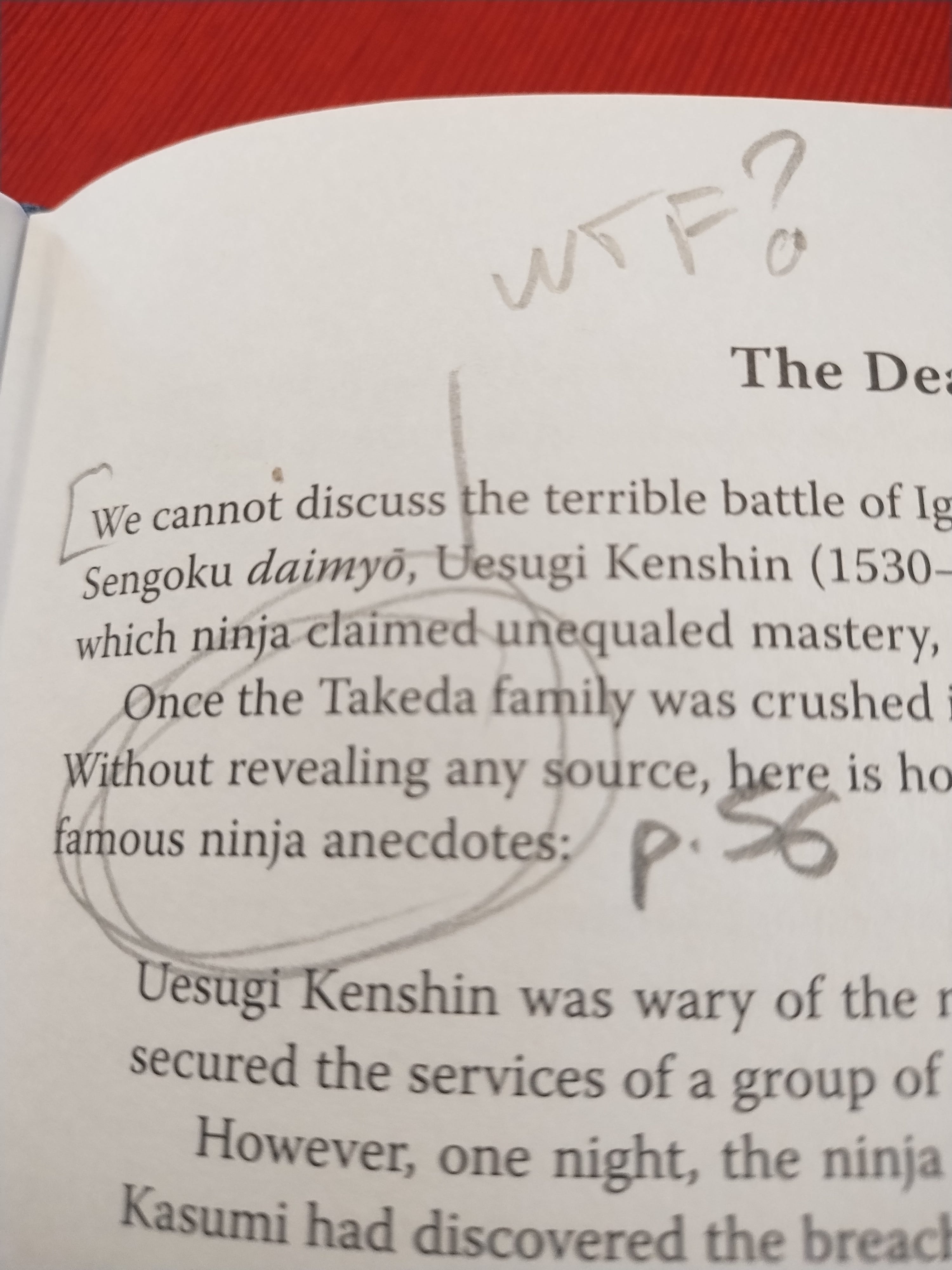
No competent editor should have allowed this stuff to make it into the final version. The take-home point, I guess, is that Ancient Shadow Warriors isn’t just terrible as a work of history, it’s terrible as a book, period. It really should not have been unleashed on the public in the form that it was, and Tuttle needs to ask itself some serious questions about its quality assurance processes across the board.
And I’m not even getting into the bigger issues here such as the apparent plagiarism and misrepresentation of sources. For a non-specialist editor to miss these two issues is maybe understandable; Turnbull’s Secret Warrior Cult was first published in 1991 and by 2010 had largely been superseded by his more recent Ninja: AD 1460-1650 (2003), so even a reasonably well-read ‘ninja’ enthusiast could well have missed the echoes between the passages. A non-specialist also would not have been able to check the original text for (say) the Taiheiki, though he might still have noticed that Zoughari had not cited any source in his discussion.
What is to Be Done?
Some readers may ask: have you shared your findings with Tuttle? In fact I have; I sent an early version of the PDF linked above to Tuttle in September 2024, more than six months ago now. As of today Ancient Shadow Warriors is still offered for sale on Tuttle’s website.
My own view is this: Ancient Shadow Warriors should be withdrawn from sale, at least in its current form. That’s what usually happens when a publisher learns of substantial plagiarism in a book, and I think it’s what needs to happen here. Ethically speaking, Tuttle should not continue to sell a book while being aware that said book contains plagiarized content. I hope and expect that Tuttle will do the right thing in due course.
A second point is that Tuttle themselves need to do a lot better. If they want to continue to be taken seriously as a publisher of books on East Asian history and culture, they can’t allow themselves to put out books that confuse one of Tokyo’s most famous landmarks with a pile of rocks in the Japanese countryside.
One of the problems, I think, is that English-speaking authors and readers aren’t generally aware of how rickety the intellectual underpinnings of ‘ninja’ history actually are. I’d like to suggest that in future, when Tuttle, Osprey, or any other publisher is considering a ‘ninja’ manuscript for potential publication, they apply something similar to the US legal concept of “strict scrutiny.” That is to say, start from the presumption that the manuscript presented is probably a bunch of bullshit, and don’t proceed with it unless you’ve checked it seven ways to Sunday. Get someone who knows the subject area, check every single citation, get a proper editor to look it over, and if the manuscript doesn’t cite its sources properly, for the love of God, don’t publish it. We’re knee-deep in crap already.
I mean, I get it. I get the state of the industry. Publishing dead tree books ain’t easy these days, and editors are an added expense. I get all that. But in the end I think that there have to be some things, like your reputation and your mission to inform your readers, that are more important than just making a few bucks.
Yamaguchi, Ninja no seikatsu (Yūzankaku Publishing, 1980), p. 75; cited in Turnbull, Secret Warrior Cult (1991), p. 42.
Yamaguchi, Ninja no seikatsu, pp. 74-5. The name ‘Iidomo’ (properly Obu) and the section about horses are circled below.
Using film stills without acknowledgment is not good practice. It’s probably not copyright infringement (though I’m not a lawyer), as it’s normally fair use to use a handful of film stills in most contexts, but you are expected to acknowledge the provenance and the stills are supposed to be germane to the discussion, neither of which appears to be the case here. At the very least, the film that the stills come from should have been identified.
I never liked the Ninja Tuttles
Found this site from your appearance on Bullshido and immediately fell in love - I've wanted to do a musical project thematically centered on questionable Western mythologizing of the Ninja for a while (but held off due to wanting a more academic understanding of the phenomenon) and this is a valuable resource on said mythologizing. In that spirit, what would you recommend as a "reading list" for the worst of junk Ninja mythology? Obviously a lot of it is actual, undisguised fiction like movies and video games, but surely there are specific works that show up in the libraries of every American with a knockoff katana. Many, I imagine, are in the Tuttle catalog.